Top 4 Ecommerce Platforms for Dropshipping With Built-In SEO
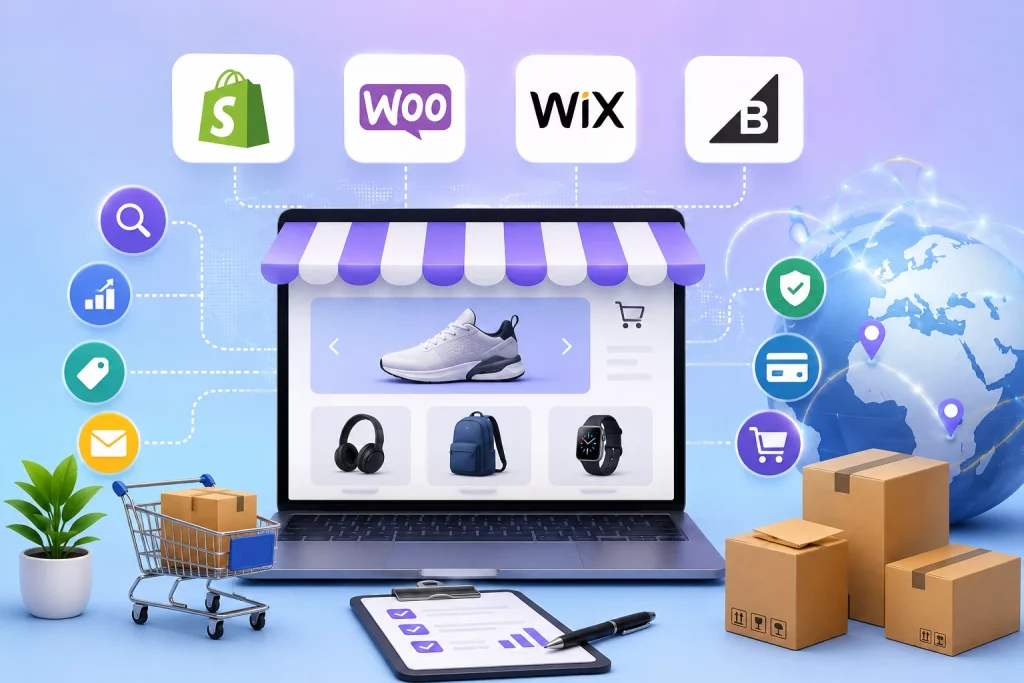
New to dropshipping? You have spent weeks researching the best products for dropshipping and finding suppliers. But to actually launch your online store, you pick any ecommerce platform based on pretty templates and cost.
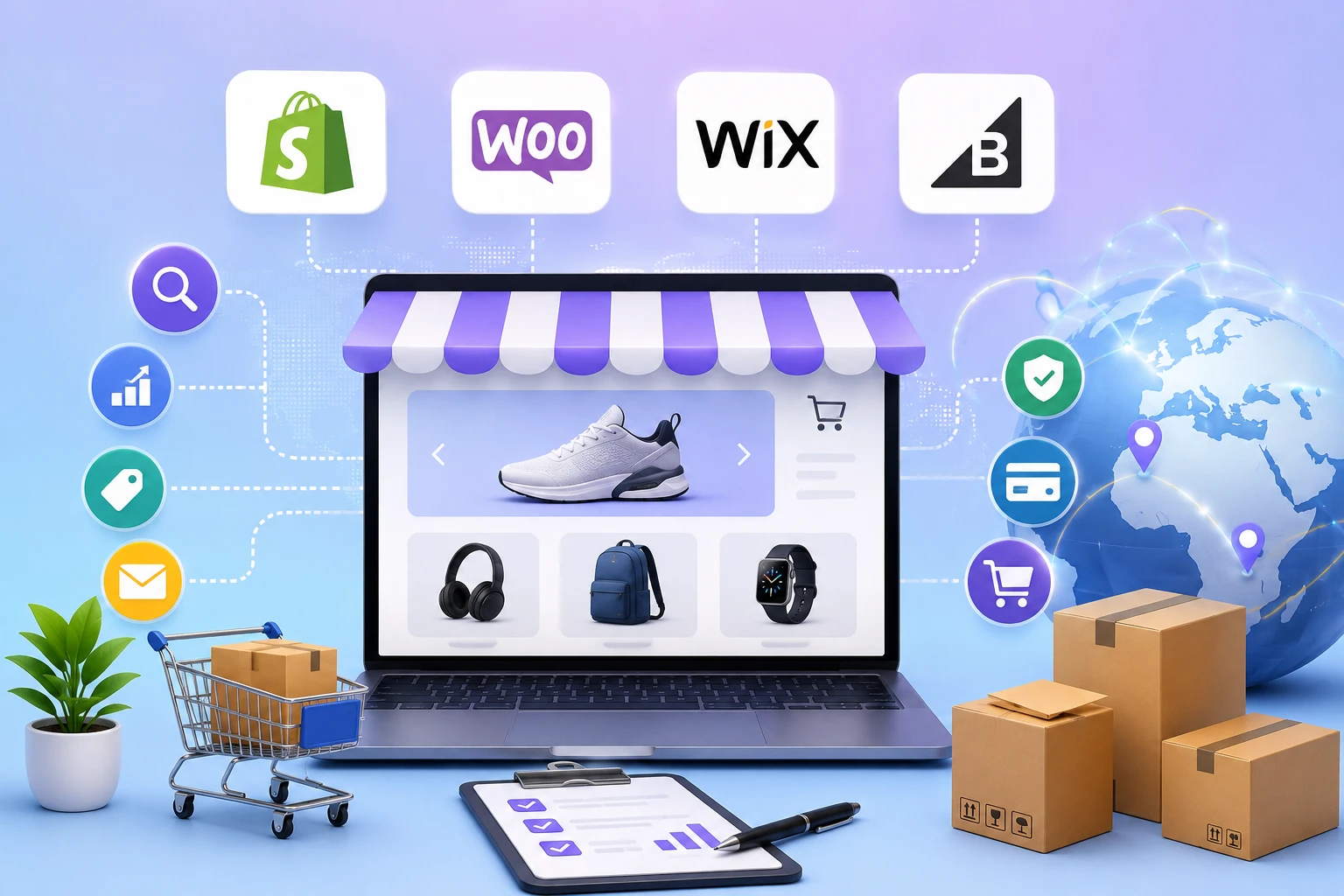
Though a free or cheap platform is not a bad idea, all your time and money invested today will go to waste when your business and products scale.
So, choosing the best ecommerce platform for drop shipping with built-in SEO features is the right step to save yourself from these headaches.
Why You Need a Right Ecommerce Platform For Your Dropshipping Business
1. It Helps You Build Online Store Without Coding
It provides the visual interface and infrastructure for your brand.
- Store Design: It offers themes and templates to build your homepage, product pages, and checkout layout without needing to code.
- Shopping Cart & Checkout: It securely processes customer data, calculates taxes, and handles the transaction logic.
2. It Helps in Managing Payments
It acts as the secure gateway to collect your retail revenue.
- Payment Gateways: It integrates with processors like Stripe, PayPal, and Apple Pay so customers can buy from you.
- Holding the Funds: It collects the full retail price from the customer, allowing you to use a portion of that money to pay the supplier for the wholesale cost.
3. It Helps You Connect With the Tools You Need
It serves as the operating system that hosts your dropshipping automation tools.
- Plugin Infrastructure: It provides the framework where dropshipping software (like DSers or Zendrop) installs.
- Data Bridge: It passes sales data from your website’s checkout directly into your dropshipping app so the supplier can fulfill the order.
4. It Helps You Run Marketing and SEO
The right platform helps you attract the right audience and convert them.
- SEO Optimization: The right platform allows you to modify your product titles, meta tags, and even create posts around your products for better SEO and ranking.
- Marketing Tools: It tracks customer behavior, handles discount codes, and manages abandoned cart recovery emails.
The Best Ecommerce Platforms For Dropshipping For Beginners
Shopify is a fully hosted, software-as-a-service (SaaS) platform that powers millions of dropshipping stores globally. It handles website hosting, security updates, and payment processing out of the box, meaning you do not need any coding knowledge to launch your website.
- Pros:
- Hundreds of 1-click dropshipping automation apps are available in the Shopify App Store.
- Fast loading times and reliable server infrastructure handle sudden traffic spikes smoothly.
- 24/7 customer support via live chat helps resolve backend issues instantly.
- Cons:
- Monthly subscription costs can become expensive when you add multiple third-party apps.
- Strict platform rules mean Shopify can close your account if you violate their terms of service.
- Charging an extra transaction fee if you do not use their native payment processor (Shopify Payments).
Price: $39 per month ($29 per month billed annually); Grow plan is $105 per month.
Shopify is best for: Solo entrepreneurs and total beginners who want a fast setup without dealing with code, servers, or website maintenance.
WooCommerce is a free plugin built for WordPress websites. Instead of paying a monthly fee to a platform, you install WooCommerce on your own web hosting server, giving you absolute ownership over your data and store design.
- Pros:
- The core software is completely free, with no recurring subscription fees or mandatory transaction charges.
- Complete customization control over every design asset, code snippet, and backend database rule.
- Excellent native blogging and content management features for long-term organic search ranking.
- Cons:
- Requires manual setup for web hosting, SSL security certificates, and software updates.
- No central customer support line; you must fix bugs yourself or hire a developer.
- Poorly optimized plugins or cheap hosting can cause slow page load speeds.
Price: Free core software, but expects $5 to $25 per month for third-party web hosting and domain registration.
WooCommerce is useful for: Budget-conscious beginners or users who already understand WordPress and want total creative freedom without recurring platform fees.
Wix is a visual, drag-and-drop website builder designed for users who prioritize layout aesthetics. It offers dedicated e-commerce plans that allow you to sync with a handful of popular dropshipping suppliers without touching code.
- Pros:
- Highly intuitive visual editing workspace makes changing your design simple.
- Clear, structured pricing with web hosting and security fully managed by Wix.
- Built-in marketing tools, email automation, and video makers included in the dashboard.
- Cons:
- A smaller app marketplace means fewer automated dropshipping supplier options than Shopify.
- Once you choose a design template, you cannot switch to a completely new template without rebuilding your content.
- Slower page loading speeds on highly complex layouts, which can hinder mobile conversion rates.
Price: Core eCommerce features start at $29 per month.
Who should use it: Creatives and designers who want to curate a small, highly visual product catalog and prioritize brand design over deep automation.
BigCommerce is a robust, hosted e-commerce platform engineered to handle complex operations without relying heavily on third-party apps. It includes more advanced out-of-the-box features in its base price than most competitors.
- Pros:
- Fewer operational moving parts because multi-currency, reporting, and search tools are built natively into the platform.
- Zero transaction fees across all plans, regardless of which third-party payment gateway you choose.
- Strong SEO architecture with completely customizable URL structures.
- Cons:
- Beginners may find it a bit difficult to get started compared to Shopify.
- Automatic plan upgrades force you into a more expensive pricing tier if your annual sales cross their revenue limits (e.g., $50,000 per year for the Standard plan).
- Fewer dedicated dropshipping starter apps in their marketplace.
Price: The core plan comes at $29 per month for beginners with annual sales up to $30K with 24×7 chat.
Who should use it: Growing dropshippers who want a stable system that scales up without needing dozens of extra application downloads.
Comparing the Best Enterprise Ecommerce Platforms for SEO
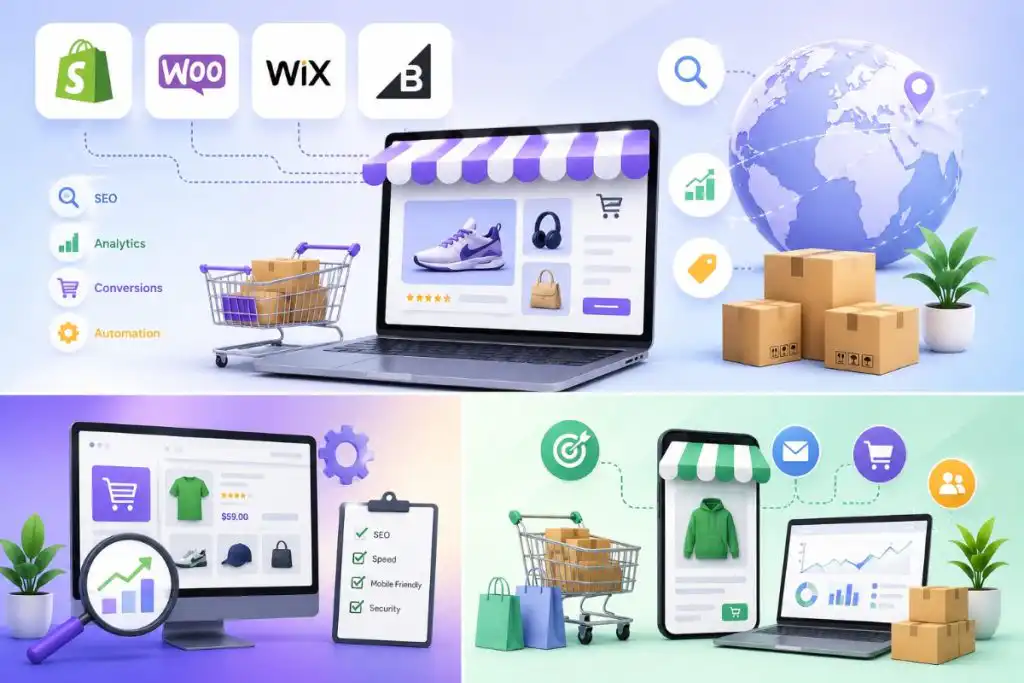
| Platform | Ease of Use | Base Monthly Price (USD) | Best For | Suppliers Supported |
| Shopify | High | $39/mo | Absolute beginners & fast scaling | Global marketplaces (AliExpress), print-on-demand, premium US/EU private suppliers (Zendrop, Spocket). |
| WooCommerce | Low | Free (Self-hosted) | Full store ownership & budget control | AliDropship, WooDropship, Importify (Amazon, Walmart, Etsy, 1688), Dropified, Spocket, Syncee, Printify, Zendrop |
| Wix | High | $29/mo | Small catalogs & design-first brands | Modalyst, Spocket, AppScenic, Syncee, Printful, Printify |
| BigCommerce | Medium | $39/mo | Growth stores wanting fewer external apps | Spocket, Syncee, AliDrop, DropCommerce, Inventory Source, Wholesale2B, Doba, Printful |
Top Features To Check Before Making a Decision
When comparing the best e-commerce platforms, look for features that actively reduce daily manual tasks. A good platform handles the technical part so you can focus on marketing and sales.
- Automated Inventory Syncing: Your platform must automatically update stock counts from your supplier. If a supplier runs out of stock, your website needs to reflect that instantly so you do not accidentally sell unfulfillable orders.
- 1-Click Product Importing: Avoid copying and pasting product descriptions or downloading images manually. Look for systems that allow you to move products, variations, and high-resolution images from the supplier dashboard to your store in one click.
- Automated Order Routing: When a customer buys from you, the platform should forward the shipping details and payment to your supplier without requiring you to type the customer information manually.
- Real-Time Tracking Code Updates: The software should automatically pull tracking numbers from your supplier and email them to your buyers the second an item ships.
Which Is the Best Ecommerce Platform for SEO?
WooCommerce has the best overall SEO features because it integrates directly with deep search optimization plugins like Yoast SEO and Rank Math. Because it runs on WordPress, it gives you absolute control over technical SEO elements that hosted platforms often restrict.
- Custom URL Structures: You can write short, keyword-clean permalinks instead of forcing mandatory folder structures (like Shopify’s mandatory /products/ string).
- Schema Markup Control: Easily add rich product snippets, showing star ratings, pricing, and stock availability directly on Google search result pages.
- Content Marketing Power: The built-in blogging engine allows you to publish long-form informational articles that build topical authority and catch long-tail voice searches.
Is There Any Free Platform?
Yes. WooCommerce, again, tops the list because of its free core software license. Since it is open-source, you never pay a monthly platform subscription or a percentage fee on your sales revenue.
While WooCommerce costs nothing, you still need to pay for a custom domain name (around $10 to $15 per year) and a web hosting service (starting around $5 per month) to make your website live on the internet.
How to Choose The Right Ecommerce Platform for SEO?
There is no best platform, there is only the right platform as per your goals.
| If You Need… | Recommended Platform |
| The easiest platform to get started | Shopify |
| The strongest SEO capabilities | WooCommerce |
| The lowest ongoing platform costs | WooCommerce |
| The best option for international expansion | Shopify |
| Advanced built-in features for scaling | BigCommerce |
| A highly visual, design-focused store | Wix |
| Minimal technical maintenance | Shopify |
| Complete control over customization | WooCommerce |
The Common Mistakes Dropshippers Make When Choosing an Ecommerce Platform
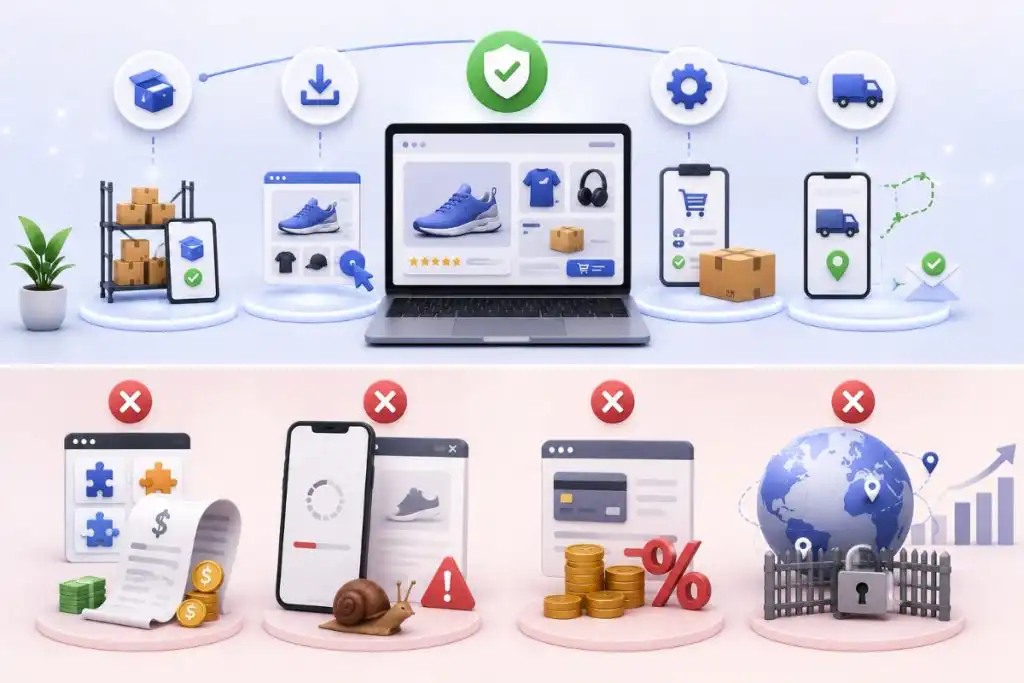
Many new store owners rush their platform choice and hurt their business growth before making their first sale. Avoid these four specific missteps to make sure you are not one of them:
- Ignoring the Hidden Cost of Apps: Picking a cheap platform plan but forgetting that you need $60 per month in premium app add-ons just to sync inventory and print shipping labels.
- Overlooking Mobile Performance: Choosing heavy, slow-loading templates that frustrate mobile shoppers, who account for over 70% of modern e-commerce traffic.
- Failing to Check Transaction Fees: Not reading the fine print regarding payment processor surcharges, which eat directly into your dropshipping profit margins.
- Locking Yourself into Low-Scale Software: Choosing a restrictive website builder that cannot handle multi-currency conversions or mass product listing updates when you try to expand into international markets later.
Key Takeaways
- Shopify is the best ecommerce platform for those who want to launch a dropshipping business without dealing with website code or server maintenance.
- WooCommerce provides total store ownership and the strongest SEO features for creators who want to rank organically on search engines without paying recurring monthly subscription fees.
- Automated inventory and order syncing are non-negotiable features to check in an ecommerce platform for dropshipping.
- Check for hidden costs like third-party app subscriptions and transaction fees before choosing the platform as they often impact your net profit margins more than the base monthly price of the e-commerce platform.
FAQs
Is Shopify good for dropshipping?
Yes, Shopify is widely considered the industry standard for dropshipping due to its extensive app ecosystem, reliable hosting, and automated order fulfillment integrations. It simplifies store management, making it an ideal choice for both beginners and scaling brands.
Is Shopify better than WooCommerce for dropshipping?
Choose Shopify if you are new to dropshipping because it is easy to set up and use, whereas WooCommerce is better if you want complete control and stronger SEO flexibility.
Can you drop ship on Etsy or eBay?
Yes, you can drop ship on eBay and Etsy, but you must follow strict marketplace policies regarding item authenticity and shipping times. Unlike running your own store, these marketplaces charge listing fees and can suspend your account instantly if customer complaints arise.
Can I switch platforms later?
Yes, you can migrate your product data, customer lists, and order histories using CSV files or specialized migration apps. However, changing platforms later can temporarily disrupt your SEO rankings and requires rebuilding your website design from scratch.
Which platform is best for international dropshipping?
Shopify is the best for international dropshipping because it offers built-in tools that make selling across multiple countries much easier. Features like multi-currency support, localized shopping experiences through Shopify Markets, international payment gateways, and a large ecosystem of supplier integrations help merchants expand globally without extensive technical setup.